
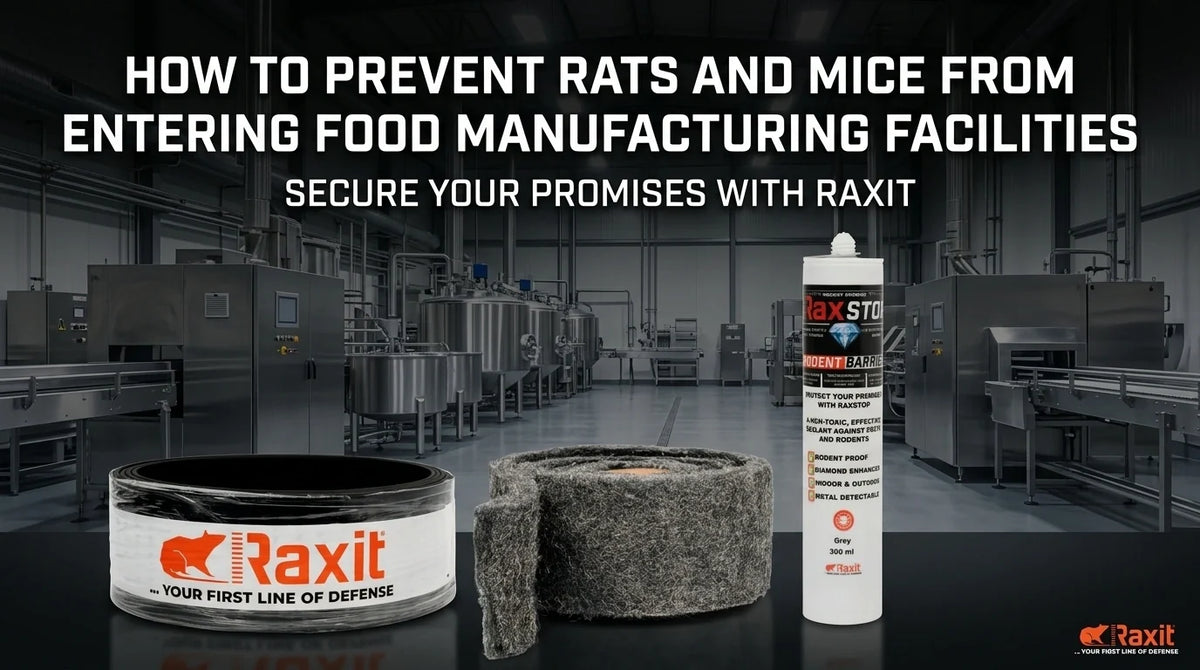
Preventing rats and mice from entering food manufacturing facilities requires good hygiene, regular inspections, secure storage, and effective physical barriers. Rodent prevention in food manufacturing helps protect ingredients, packaging, finished products, and workplace hygiene. Businesses should combine these measures with a planned pest management programme to reduce the risk of infestation.
Why Is Pest Proofing Important in Food Manufacturing Facilities?
How can rodents affect food production?
Rats and mice can contaminate food ingredients, damage packaging, and leave droppings or urine around storage and production areas. Their presence can also damage cables and equipment, potentially disrupting operations.
Food manufacturers should identify potential entry points and act quickly when signs of rodent activity appear. Regular inspections and suitable proofing measures help reduce these risks and support effective hygiene management.
Where do rats and mice enter food factories?
Rodents can enter through gaps beneath external doors, loading bay entrances, cracks in walls, and openings around pipes and cables. Goods-in areas can be particularly vulnerable because doors are frequently opened during deliveries.
Inspect these locations regularly and repair damaged building surfaces. Installing suitable pest proof door seals can help close gaps beneath doors and reduce opportunities for rodents to enter production and storage areas.
How can food factories maintain better hygiene?
Good hygiene reduces the food and shelter available to rodents. Businesses should clean spills promptly, remove waste regularly, keep ingredients in suitable sealed containers, and avoid unnecessary clutter around storage areas.
Keep stock organised and inspect packaging for signs of damage. Staff should also know how to report droppings, gnaw marks, or other evidence of rodent activity so that problems can be addressed quickly.
What Are the Best Ways to Rodent-Proof a Food Factory?
How can you seal gaps around pipes and walls?
Inspect openings around service pipes, electrical cables, and wall joints. Select a suitable barrier based on the size of the gap, the surrounding material, and the conditions in the area.
Purpose-designed steel wool mice control products can help block suitable openings where rodents may enter. For other gaps, an appropriate rodent exclusion sealant may help close access points. Always follow product instructions and relevant hygiene requirements for food production environments.
Which door seals are suitable for food manufacturing facilities?
The right door seal depends on the entrance type, the size of the gap, and how frequently the door operates. Loading bays, staff entrances, and goods-in areas may need different solutions.
A suitable commercial entrance door seal can help reduce gaps around compatible automatic entrances. Check that any installation allows the door to operate safely and meets the facility's hygiene and operational requirements.
How often should food factories check for rodent activity?
Food manufacturing facilities should follow a documented inspection schedule based on their risk assessment, site conditions, and pest management procedures. Check doors, storage areas, waste zones, and service openings for damage or signs of rodent activity.
Record findings, arrange repairs promptly, and review recurring problems with the pest management team. Combining physical proofing, good hygiene, and regular monitoring helps businesses maintain a more secure food production environment.


Leave a comment
This site is protected by hCaptcha and the hCaptcha Privacy Policy and Terms of Service apply.